Geometric Modeling Kernel C3D Modeler

Implement solid, surface, direct, and wireframe modeling into your engineering software.
Evaluate
Geometric Modeling Kernel C3D Modeler, photo 1
Geometric Modeling Kernel C3D Modeler, photo 2
Geometric Modeling Kernel C3D Modeler, photo 3
Geometric Modeling Kernel C3D Modeler, photo 4
Geometric Modeling Kernel C3D Modeler, photo 5
Geometric Modeling Kernel C3D Modeler, photo 6

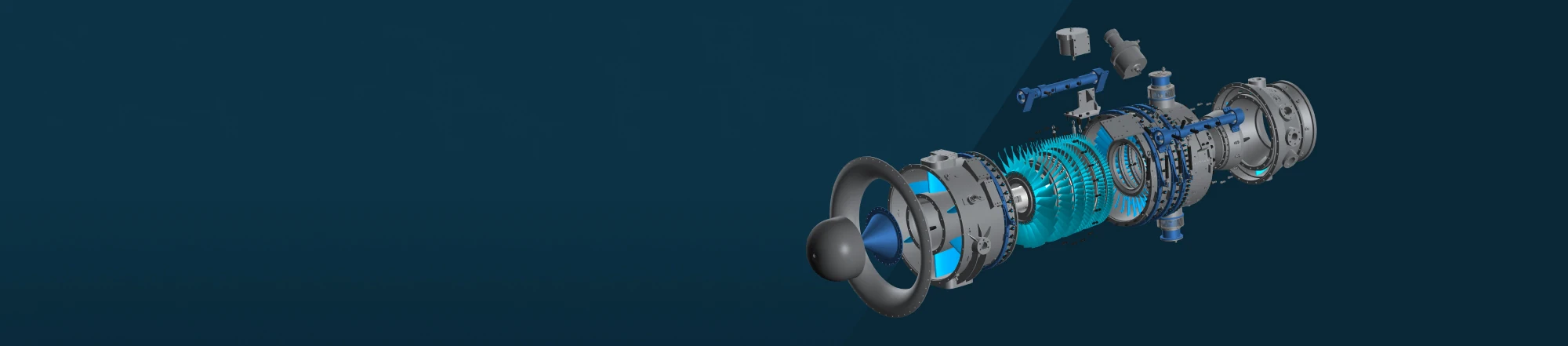
C3D Modeler is a geometric modeling kernel for developers of CAD, CAM, CAE, BIM, and other engineering applications. It performs all geometric calculations necessary for creating 2D sketches and 3D models.

The geometric kernel supports the following modeling types: wireframe, surface, solid, direct, and sheet metal.

As a 3D modeling kernel, C3D Modeler uses the boundary representation (B-rep) method to define shapes and build precise geometric models based on 3D bodies. For composing 3D bodies, it uses surfaces and curves. It groups the resulting 3D bodies into building blocks in advance of creating more complex assemblies.

In addition, C3D Modeler supports polygonal representations. It builds polygonal 3D models through triangulation. A polygon mesh is a collection of vertices, edges and faces that define the shape of a polyhedral object's surface, and so are convenient for making calculations and generating visualizations.

The geometric kernel records build logs for bodies and wireframes, including the methods used, operation sequences and input data. These logs help developers edit geometry later and rebuild models with new parameters. Detailed information about objects' geometry (in the form of surfaces, curves and points) are kept in topological elements of model's objects such as faces, edges and vertices. Additional information for every object's item or object as whole can be kept inside them in the form of attributes.

Tested & Validated Daily

To enhance the 3D CAD kernel quality, we use static code analyzers, unit testing, performance testing, automatic package assembly distribution and automated regression testing. To test our solid body and surface construction algorithms, we use a specially created database that contains over 500,000 of 3D models. Every day, we automatically compile the geometric kernel, as well as perform unit test checks, model rebuilding testing, flat projection construction testing and data conversion testing.

Tested & Validated Daily

Expandable API

An essential feature of the C3D Modeler is its open architecture, which allows you to extend it beyond the standard function set. You create custom objects that are specific to your application by easily inheriting them from C3D Modeler’s standard primitives. When this is combined with our safe update system (which runs independently of existing code), you are assured that version updates will not affect the functions you extended.

Expandable API

C3D Modeler Functionality

Solid modeling operations:


  • Boolean
  • Extrude, revolve, sweep
  • Thin-walled bodies
  • Fillets and chamfers
  • Face tapering
  • Ribs

Wireframe modeling operations:


  • Curves
  • Intersection of curves
  • Extend
  • Trim
  • Unwrapping
  • Equidistant curves
  • Outline curves

Surface modeling operations:


  • Extrude; revolute, sweep
  • Loft, surface based on a curve grid
  • Equidistant surface
  • Trim/Extend
  • Fillets
  • Patch, stitch

Direct modeling operations:


  • Remove faces
  • Change the fillet radius
  • Replace face
  • Move/rotate face
  • Resize face
  • Merge smoothly jointed faces
  • Resize holes

Sheet modeling operations:


  • Bend/unbend
  • Convert solid to sheet metal
  • Stamp
  • Rolled sheet metal
  • Bend relief
  • Louvers
  • Reinforcement rib

Geometric calculations:


  • Surface areas, volumes, and properties of mass inertia
  • Building planar projections
  • Generating surface triangulations

Industries

C3D Modeler is a geometric modeling kernel for CAD, CAM, CAE, BIM, and custom engineering software.

CAD & MCAD

Use wide range of methods for working with curves and surfaces in 2D and 3D to create models and assemblies of nearly any shape and complexity.

CAM

Create part modeling, assemblies, fillets, chamfers and mass calculations.

CAE

Create and edit precise 3D models prior to generating the meshes necessary for analysis and simulation.

AEC & BIM

Model building elements and structural profiles cut openings and penetrations with Boolean operations, produce plans and sections through flat projections.

EDA

Create 3D geometry for boards, enclosures, components.

PDM & PLM

Rebuild and compare model geometry across engineering workflows and generate lightweight triangulated representations for visualization.

Robotics

Build the precise geometry of manipulators, tooling and workcells, generate triangulated models for simulation.

Furniture & Woodworking

Create parts, panels, joints and manufacturing-ready geometry.

Custom Engineering Software

Use C3D Modeler as a geometric kernel instead of building one from scratch.

Supported Platforms

OS Architecture Compiler Character set
FreeBSD 13.1 x64 CLANG 10.0.1 Unicode, Multi-Byte
Windows 10 x86, x64 MS Visual C/C++ 2019 - 2022 Unicode, Multi-Byte
MacOS 11.3 x64, arm64 CLANG Unicode
IOS 14.5 arm64
CLANG Unicode
Linux GLIBC (2.17)
x64, arm64 gcc
Unicode, Multi-Byte

FAQ

Answers to common questions about the C3D Modeler geometric modeling kernel.

1. What is C3D Modeler?

C3D Modeler is a geometric modeling kernel. It is the core component of C3D Toolkit. It provides tools for creating and editing 2D and 3D geometry, working with model topology, performing computations, calculating mass-inertia properties, generating flat projections and cross-sections from 3D geometry, and triangulating geometry.

2. What types of geometry representation does C3D Modeler support?

The primary method of describing geometry in C3D Modeler is the boundary representation (B-Rep), in which a solid body is defined by the boundary separating its interior from the exterior volume. Geometric objects are described using parametric surfaces and 2D and 3D curves of various types, which are arranged into a topological structure composed of faces, edges, and vertices. B-Rep is currently the most widely adopted approach in engineering applications.

In addition to B-Rep, a polygonal representation is supported, in which a geometric object is described by a set of triangular facets. A polygonal model can be obtained from any geometric object in C3D Modeler by performing triangulation with a specified tolerance. Such models are most commonly used for visualization purposes.

3. What geometric modeling types does C3D Modeler support?

The geometric kernel supports the following modeling types: solid, wireframe, surface, direct, and sheet metal.

4. Which operating systems can C3D Modeler be used on?

The builds are available for Windows, Linux, FreeBSD, macOS, iOS, and Android. Each release includes builds for the Windows and Linux operating systems, including ARM64 versions; builds for the remaining platforms are provided upon separate request.

5. Which programming languages does C3D Modeler support?

Initially, C3D Modeler was intended for use in applications developed in C++. At present, we also provide wrappers that enable the use of C3D Modeler in the .NET environment: one built with а C++/CLI technology (Windows only) and one based on p/Invoke (Windows and Linux).

6. What does the C3D Modeler distribution include?

The user receives dynamic libraries built for a specific operating system (.dll for Windows, .so for Linux, .dylib for macOS), C++ header files, the files required to perform the build, a demo application with source code, and documentation.

7. What is the licensing policy for the geometry kernel?

We offer flexible licensing options to meet every use case, goal, and customer capability. The most common option is a commercial license. This involves annual payments for the right to use the kernel, and royalties on sales of your final product based on C3D Modeler. A corporate license applies when the product is developed for in-house use. In this case, the price is determined on an ad hoc basis: we discuss the specific conditions of use and offer a customized license model.

8. Is technical support included in the license?

Yes, absolutely. We not only provide technical support, but also closely collaborate with each user to meet their specific needs.

9. What software development skill level is required to work with the geometric kernel?

Working with the geometry kernel is difficult without a solid understanding of geometry, which is why engineering-software developers often have an engineering background. In addition, a strong knowledge of mathematics and programming experience in the chosen language are both essential.

10. Is migration from another geometric kernel to C3D Modeler possible?

Yes, it is. We have examples of companies that have moved from other geometric kernels to C3D Modeler. The difficulty depends on which kernel features you use and how low-level your code is. Typically, the transition is gradual: you start by converting geometry from an external format to C3D, performing the necessary operations, and exporting it back. Over time, you begin to adopt more C3D functions, and eventually, your team migrates fully. For that initial conversion step and for handling your existing model files, we offer the C3D Converter module, which supports a wide range of import and export formats.

11. How does C3D Modeler work with other components of the C3D Toolkit?

C3D Modeler is the core component of C3D Toolkit. It exposes its classes to the other components, which allows them to be used together seamlessly within a single application and eliminates the need for data conversion when passing data between components.

Other C3D Toolkit Modules

Up